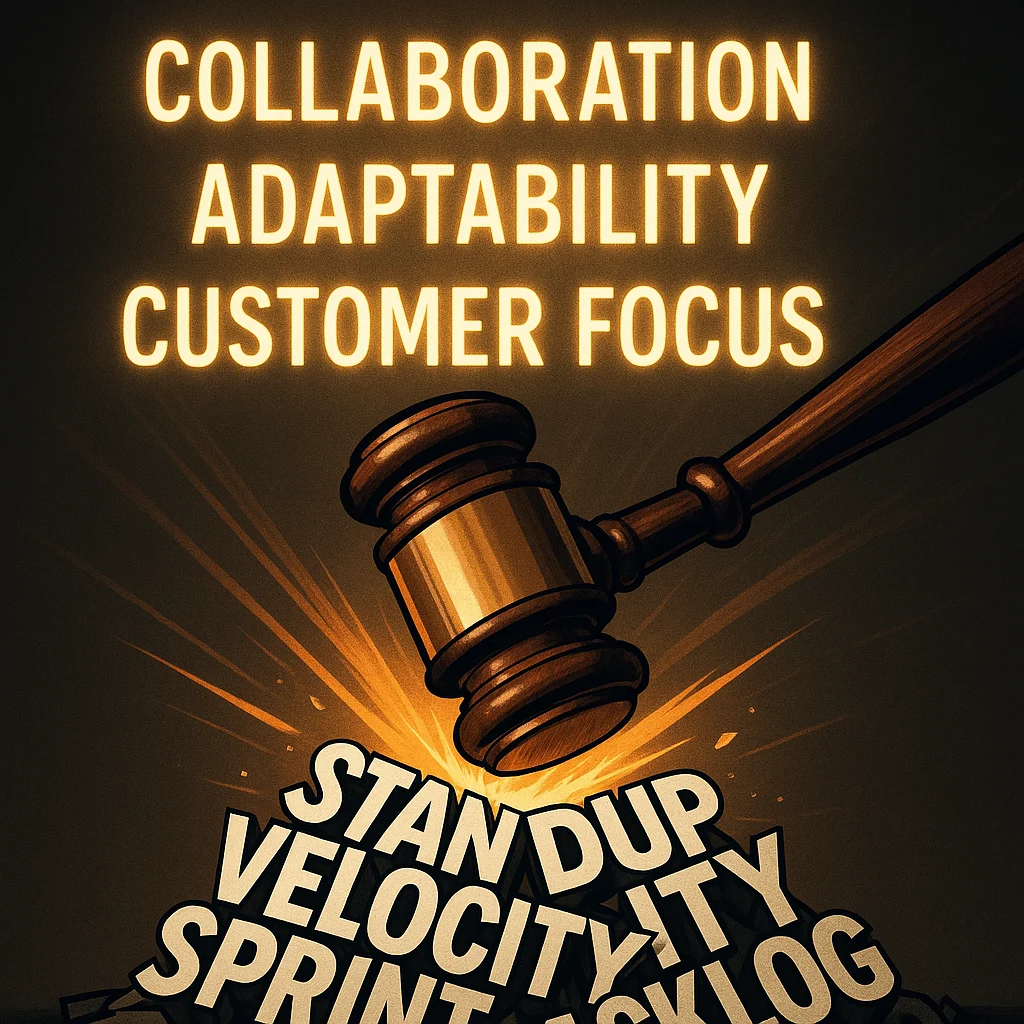
In recent years, a growing chorus of voices in the tech industry has declared, “Agile is dead.” Critics point to failed transformations, endless meetings, and bloated processes as evidence that Agile has lost its way. But is Agile truly dead—or has its original spirit simply been misunderstood, misapplied, and in need of justice?
The Spirit of Agile
Agile began as a bold response to rigid, bureaucratic project management. The Agile Manifesto championed collaboration, adaptability, and delivering real value to customers. Its core values—individuals and interactions, working software, customer collaboration, and responding to change—were meant to empower teams, not shackle them.

Where Did Agile Go Wrong?
The problem isn’t Agile itself—it’s how organizations have implemented it. Many so-called “Agile” transformations have focused on rituals and tools, rather than mindset and values. Teams are forced into rigid frameworks, overloaded with meetings, and measured by velocity instead of value.
- Cargo cult Agile: Copying ceremonies without understanding their purpose.
- Process over people: Prioritizing checklists over collaboration.
- Misaligned incentives: Focusing on outputs, not outcomes.
Agile Needs Justice, Not a Funeral
Agile doesn’t need to be buried—it needs to be rescued from misuse. Justice for Agile means returning to its roots: empowering teams, embracing change, and delivering value. It’s about context over dogma, and principles over process.

How to Bring Justice to Agile
- Revisit the Manifesto: Start with values, not frameworks.
- Empower teams: Trust people to find the best way to deliver value.
- Focus on outcomes: Measure success by customer impact, not story points.
- Adapt, don’t adopt: Tailor Agile practices to your unique context.
Agile in Action: Stories of Justice
Organizations that have returned to Agile’s roots are thriving. Teams that focus on collaboration, feedback, and continuous improvement deliver better products—and enjoy their work more.

Conclusion
Agile is not dead. It’s waiting for justice—a return to its original values and intent. By focusing on people, outcomes, and adaptability, we can revive Agile and unlock its true potential. The future of Agile isn’t in more process, but in more purpose.
Leave a Reply