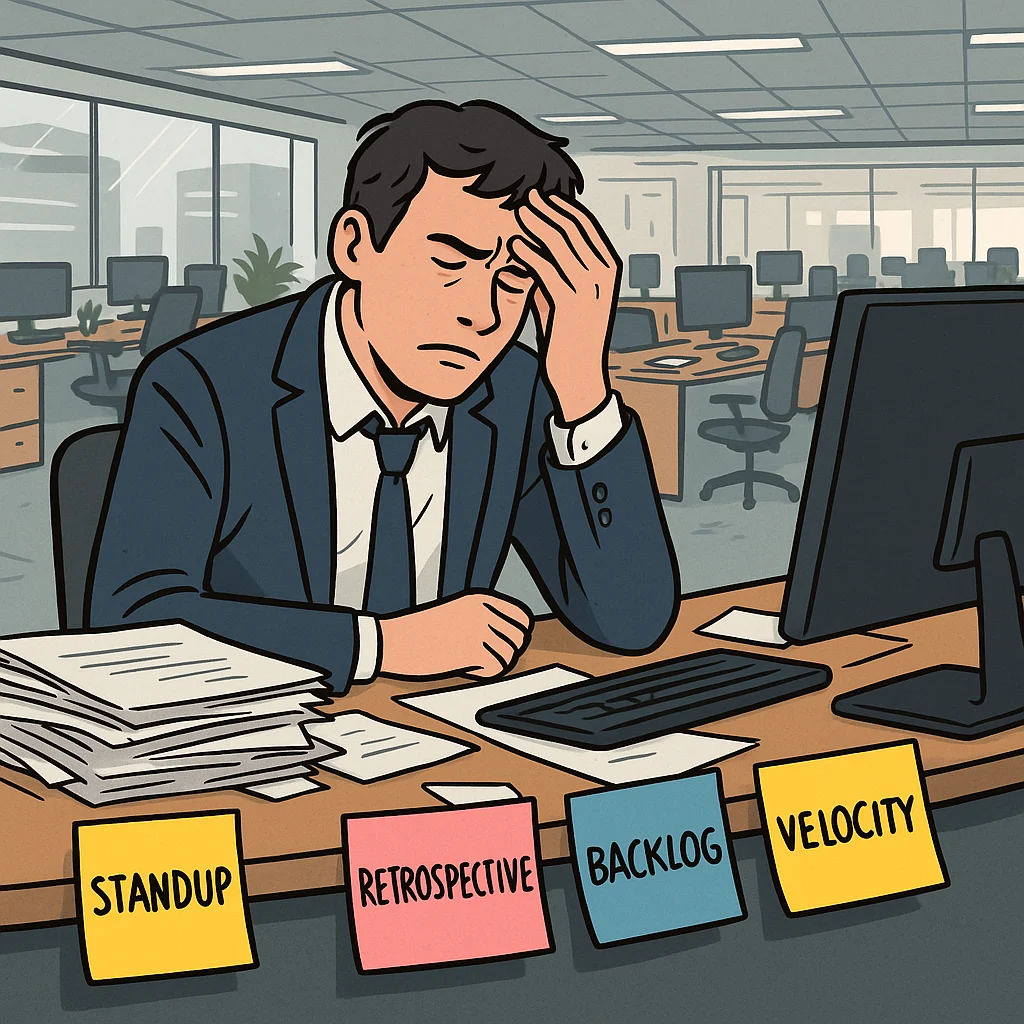
The word “Agile” was once synonymous with innovation, speed, and empowered teams. Today, in many corporations, it’s more likely to trigger eye rolls, skepticism, or outright negativity. Why has a movement designed to liberate teams become a source of frustration and cynicism?
The Promise vs. The Reality
Agile promised flexibility, collaboration, and faster delivery. But for many, the reality has been endless meetings, rigid processes, and a sense of being micromanaged. The gap between Agile’s ideals and its implementation is often the root of negativity.

Common Reasons Agile Triggers Negativity
- Agile as a Buzzword: In many organizations, “Agile” is used as a catch-all term for any change initiative, diluting its meaning and value.
- Process Overload: Instead of simplifying work, Agile is sometimes implemented as a new layer of bureaucracy, with more meetings and more rules.
- Lack of Empowerment: Teams are told to “be Agile” but aren’t given the autonomy or trust to make real decisions.
- Misaligned Incentives: Leadership expects instant results, while teams struggle to adapt to new ways of working.
- Change Fatigue: After multiple failed “transformations,” employees become cynical about the next big thing.
The Human Cost
When Agile is imposed from the top down, without genuine buy-in or understanding, it can erode trust and morale. Employees may feel their expertise is ignored, their time is wasted, and their voices are unheard.

How to Reclaim Agile’s Positive Impact
- Start with Why: Reconnect teams to the purpose behind Agile—delivering value and improving collaboration.
- Empower Teams: Give teams real autonomy to shape their own processes.
- Simplify: Focus on outcomes, not rituals. Eliminate unnecessary meetings and reports.
- Listen: Involve employees in shaping how Agile is practiced, and adapt based on feedback.
- Lead by Example: Leaders should model Agile values—transparency, trust, and continuous improvement.
A Path Forward
Agile doesn’t have to be a dirty word. When practiced with empathy, clarity, and a focus on people, it can still unlock creativity and resilience. The key is to move beyond buzzwords and bureaucracy, and return to Agile’s roots: empowering teams to do their best work.
Leave a Reply